Give your question an item
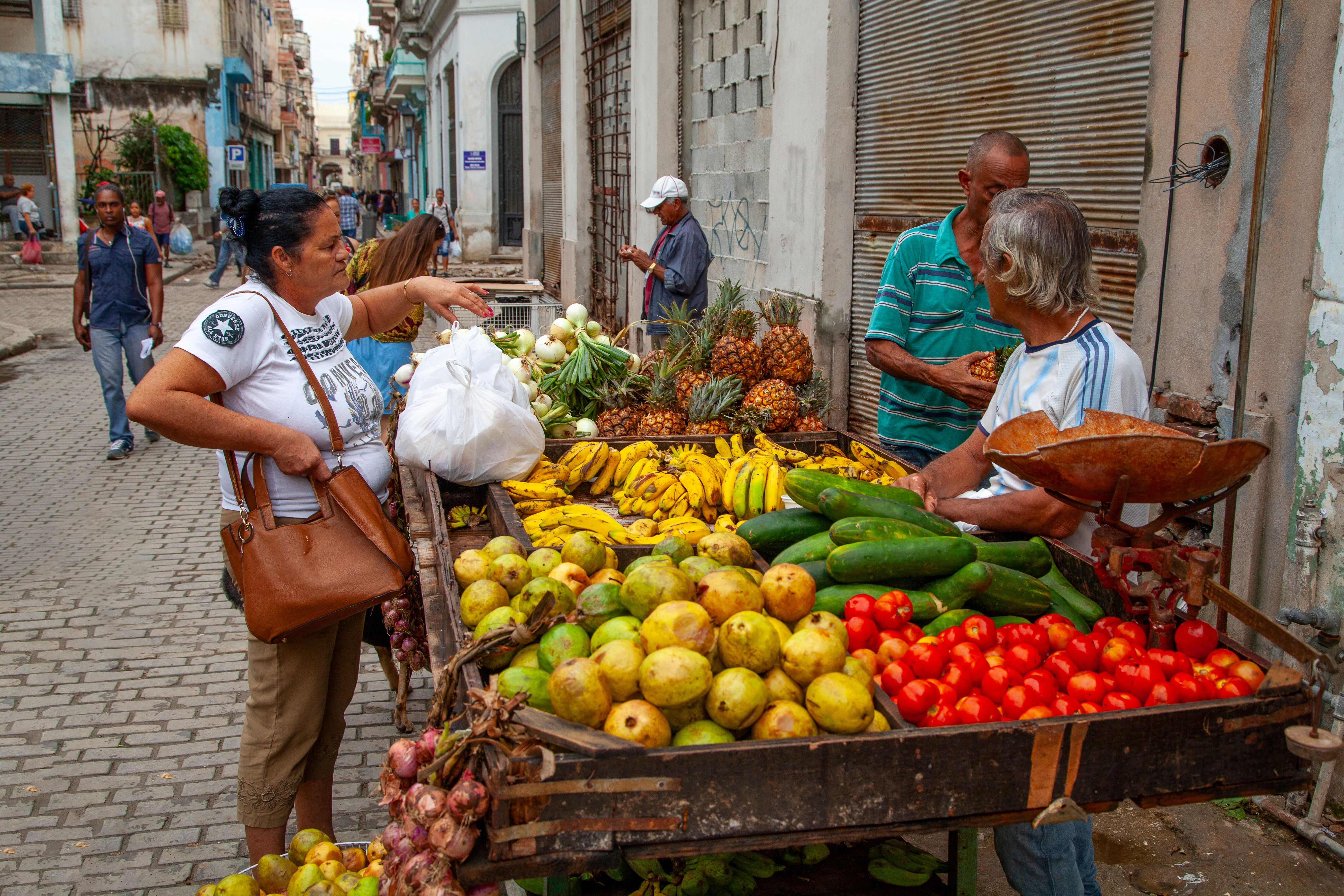
At a market in Cuba, start with the item you want: ¿Tiene tomates? asks whether the seller has tomatoes. ¿Qué tiene hoy? leaves the answer open. The second question is useful when you want to see what is available, but it may produce a longer reply than you are ready to follow.
The exchanges here are original language practice, not reports of current stock or prices. Choose one item first. If the seller names something unfamiliar, ¿Cómo se llama eso? lets you ask its name while indicating the item. Keep the answer with the question, so the new word belongs to a usable exchange.
Find out what the price measures
A number alone can leave an important question unanswered. Is that the price for one item, a bag, a pound or a kilogram? Ask ¿Ese precio es por unidad o por libra? when those are the two possibilities you need to distinguish. If the sign uses kilo, repeat that unit instead.
Learn por together with the unit: por unidad, por libra, por kilo. You are checking what the amount applies to. Do not assume a unit from the kind of produce or from what another seller used. Listen to the reply before deciding how much you want.
Put the quantity and the item together
Compare una libra de tomates with dos tomates. The first specifies a weight; the second specifies a number of items. Those requests can produce different amounts. You can say Póngame una libra de tomates, por favor, or Quisiera dos tomates. Choose the request that matches what you intend to buy.
For a smaller weight, practise media libra de tomates. For more than one pound, dos libras de tomates. Keep de between the weight and the produce. Read the phrase aloud as a whole, then change only the quantity. Our guide to polite requests explains other ways to ask for an item or an action.
Check the total separately
¿Cuánto es en total? asks for the amount for the whole purchase. It serves a different purpose from asking the unit price. If you add another item after hearing a total, ask for the total again. A clear confirmation is more useful than trying to reconstruct a reply you only partly heard.
If the currency is unclear, ask ¿En qué moneda? You can also ask ¿Cómo puedo pagar? before assuming a payment method. These questions help you establish the actual terms with the seller. This lesson does not supply current prices, exchange rates or a claim that every Cuban market accepts the same payments.
Follow one purchase from beginning to end
Original practice dialogue: —Buenos días. ¿Tiene tomates? —Sí. —¿El precio es por libra? —Sí, por libra. —Póngame una libra, por favor. —¿Algo más? —No, gracias. ¿Cuánto es en total? Each question has a job: availability, unit, quantity, then the total. Practise the buyer’s lines before taking both roles.
A jaba is a bag in Cuban usage. Tengo una jaba says that you have one; ¿Tiene una jaba? asks whether the seller has one. Neither sentence establishes whether a bag costs extra. If that matters, ask directly. The separate article about la jaba explains the word’s everyday context.
Correct a quantity before the purchase continues
Perhaps you asked for una libra and the seller repeats dos libras. You can answer Una libra solamente, por favor. The correction names the exact detail; it does not require a long explanation. If your own request was unclear, say Me refería a una libra. Then listen for the corrected quantity before discussing the total.
Here is a separate number exercise with invented amounts, not a current price in Cuba: each item costs three units of money and you choose two items. The total is six. Practise ¿Tres cada uno? and ¿Seis en total? The first question checks a unit price; the second checks the result for two. Replace the numbers when you are comfortable, keeping the two questions distinct.
Before a real purchase, you also need the actual currency and payment conditions, established with the seller. A practice sum cannot supply those. To find the place on foot, use our walking-directions lesson first; it gives you the questions and route confirmations that come before this market conversation.
Practise the details that change the purchase
Write three short shopping requests with different items or quantities. Read one to a partner and ask them to repeat what they understood. If you asked for a weight but they repeat a number of individual items, return to the unit. That small difference is worth correcting before moving on.
Then add a final question about the whole purchase. Keep the exercise focused on quantities and confirmation, rather than memorising a supposed standard market price. For prepared meals, continue with Cuban food and menu vocabulary: there the useful questions concern ingredients, portions and what comes on the plate.