Read the word, then ask what is on the plate
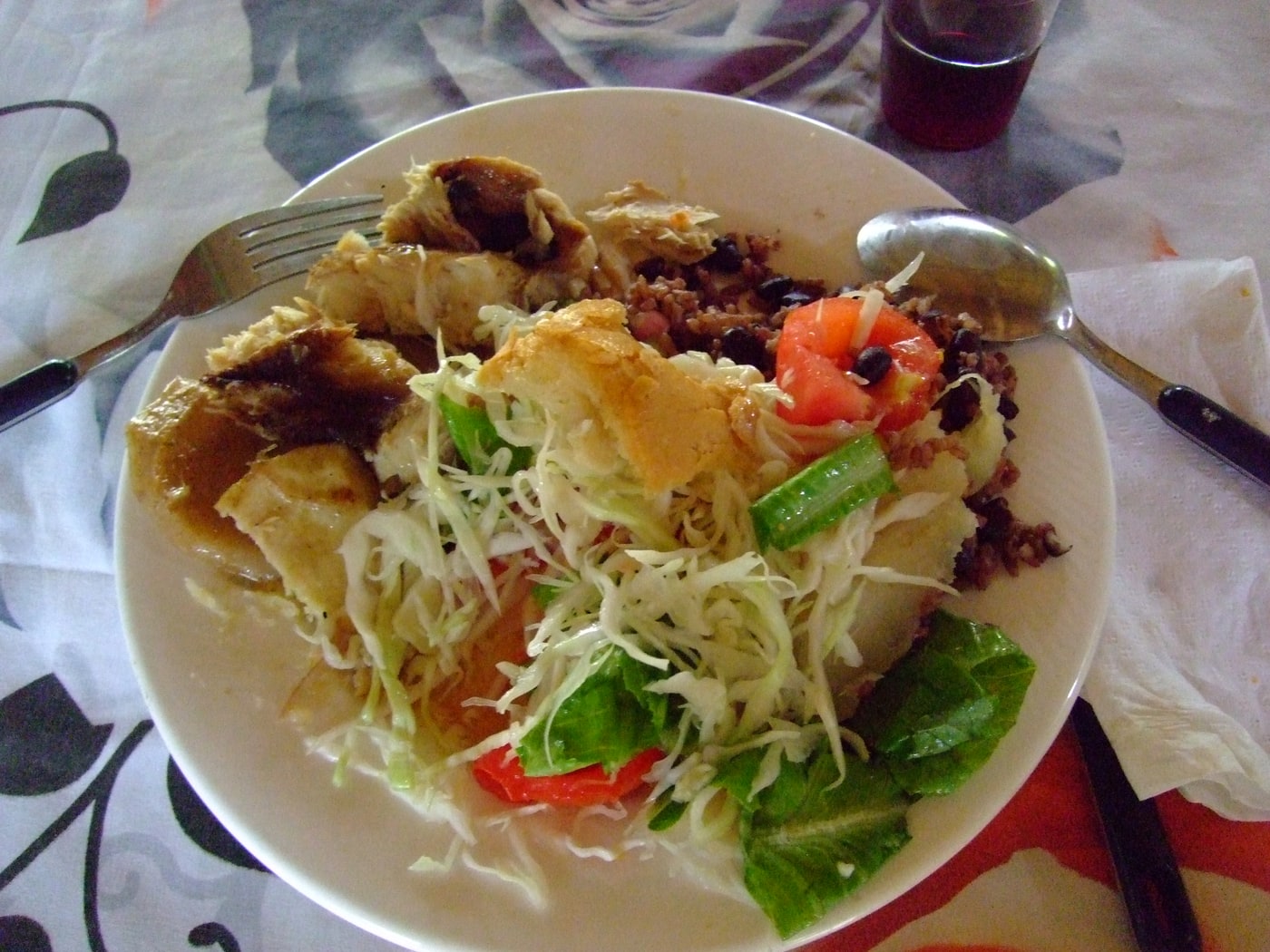
A menu gives you names. Your next question turns those names into a meal you understand. In Cuba, learning words such as viandas and congrí helps you follow descriptions of a plate and ask what comes with it. Start with ¿Qué lleva este plato?: “What does this dish contain?” It invites an explanation rather than another word you have to guess.
The short exchanges in this guide are original written teaching examples. Keep the food word in Spanish while you explain the meaning in your own language. Then add a question you could actually use. The Cuban kitchen activity offers further academy practice; this public guide concentrates on categories, ingredients, preparation and ordering.
Viandas names a category
The ASALE entry for vianda includes a Cuban sense for certain tubers and fruits eaten cooked or fried. A menu category called viandas therefore needs a follow-up: ¿Qué viandas tienen hoy?. You are asking which ones are available, rather than treating the category as the name of one fixed ingredient.
Keep the answer attached to the category. In a practice reply, Hoy tenemos yuca supplies the item that was missing. You can then ask about its preparation. That sequence is useful: first identify what is offered, then ask how it comes. A dictionary gives you the meaning of the word; the person answering gives you the information about that particular plate.
Yuca, malanga and boniato: keep the names distinct
Yuca, malanga and boniato are useful words to recognise separately when learning about a Cuban meal. Do not reduce the whole group to one English word and lose the ingredient the speaker named. Yuca corresponds to cassava; boniato is a sweet potato. Learn malanga as its own food name, with the explanation or photograph of the ingredient you are discussing.
Then build a preparation question: ¿La yuca viene hervida o frita? asks whether the cassava comes boiled or fried. The alternatives make the question precise. A reply naming yuca does not by itself answer the preparation question. If you need the word repeated, try ¿Cómo se llama esa vianda? and keep the name with the whole exchange.
Congrí: ask about the beans
Congrí names a rice-and-bean dish. Importantly, the ASALE entry allows black or red beans in its definition. Avoid learning a rigid rule that the word can only refer to one colour of bean. When the distinction matters to your order, ask ¿El congrí es con frijoles negros o colorados?. The answer tells you about the food being offered.
Treat an unfamiliar dish name as the beginning of a useful exchange. ¿El arroz viene junto con los frijoles? checks how they come. You can understand the ingredient words and still need to clarify the preparation. That is normal vocabulary work: the name, the ingredients and the way they are served each contribute a different piece of information.
Plátano and tostones: notice preparation and ripeness
Plátano gives you an ingredient name, while tostones names a preparation. In the Cuban tostones article, green plantain is cut, fried, flattened and fried again. Knowing that difference helps you ask for the form you mean instead of assuming every plantain dish will arrive the same way.
Compare ¿Tienen tostones? with ¿El plátano está verde o maduro?. The first asks whether a named preparation is available; the second asks about the plantain itself. Keep those two questions in separate notebook entries. If you want to explore other Cuban foods through their cultural context, continue with quimbombó and casabe.
Ask what is included and what can be changed
¿Con qué viene? asks what comes with the dish. ¿La guarnición está incluida? asks whether the side is included. These questions do different jobs, even though both help you understand the whole order. Start by identifying the main dish, then clarify the accompaniment and what the offer covers.
For a change, use ¿Se puede pedir sin cebolla? and wait for a clear reply about what the kitchen can prepare. If you need exact ingredient information, ask for it explicitly and check the answer. The guide to polite requests in Cuban Spanish explains useful ways to ask for an action; the food terms here give that request a concrete purpose.
Follow a complete short ordering exchange
Read this original practice exchange: ¿Qué tienen hoy? — Pollo con arroz y viandas. — ¿Qué viandas hay? — Yuca. — ¿La yuca viene hervida? — Sí. Each question fills one gap. First you learn the offer, then the particular vianda, then its preparation. You do not need to ask every possible question in the first sentence.
Finish by confirming your choice: Entonces, pollo con arroz y yuca, por favor. If you hear that something is not ready yet, ¿Todavía no está listo? can check the timing. Our guide to ya and todavía explains those time expressions. Make sure you understand the reply before changing your order.
Learn a word together with its useful question
Give each new entry three parts: the Spanish food name, a short explanation and a complete question. For viandas, ask which ones there are. For yuca, ask how it is prepared. For congrí, ask about the beans when you need that detail. For tostones, ask whether that preparation is available. This turns a list into a small set of conversations.
Before your next outing, pair this guide with Cuban transport vocabulary so you can ask about the journey as well as the meal. For help adapting the questions to your level, explore online Cuban Spanish classes. Bring the food names you find confusing and work through one complete exchange at a time.