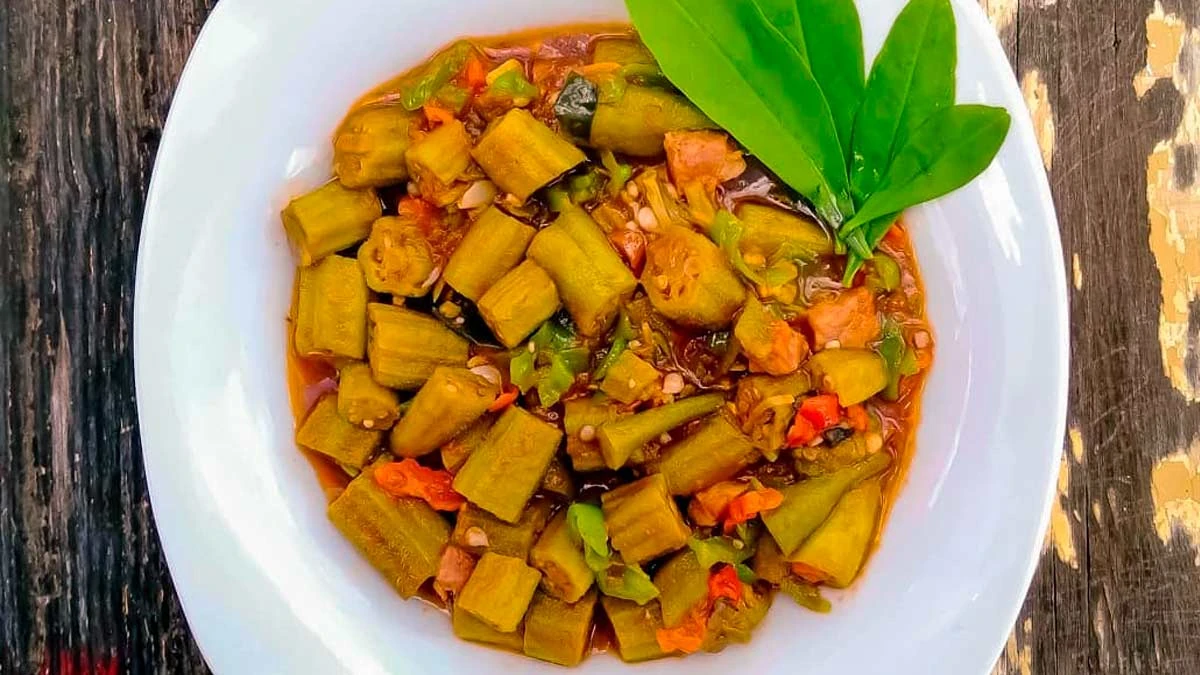
Quimbombó is the Cuban name for okra, the green pod that releases a slippery substance often called baba. That substance is the plant's mucilage. When the pods are cut, it can help thicken a soup or stew instead of leaving the pieces separate from the liquid around them.
In a Cuban kitchen, quimbombó can go into the pot with pork, onion, garlic and pepper. Other versions use tomato or different seasonings. The result is a guiso, with the vegetable becoming part of the sauce rather than a separate side dish. There isn't one combination that every family follows.
Bolitas de plátano can make it a more substantial plate. Green plantains are cooked, mashed with a garlic mojo and shaped into small balls, which join the stew near the end. Served with white rice, the dish brings the pods, meat, sauce and plantain together in the same meal.
The preparation can also change the texture. Lemon or vinegar appears in some methods before cooking to reduce the slipperiness. That doesn't turn okra into a different vegetable; it reflects how much of its characteristic consistency the cook wants in the finished pot. The cut and preparation matter as well as the seasoning.
The disagreement has even reached music. PALO!'s song Quimbombó was written by Leslie Cartaya and Steve Roitstein after she objected to making a song about a vegetable she disliked. They made the story about being served it for dinner instead. Quimbombó had managed to become a recipe, an argument and a musical subject.
🍲 More Cuban dishes, ingredients and the stories around the table inside Cuban Spanish Academy.