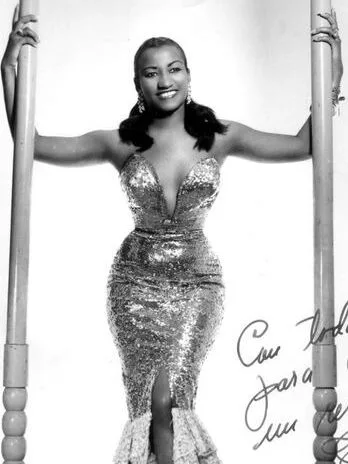
Celia Cruz did not need a long introduction. One word was enough:
“¡Azúcar!”
And everybody knew who had arrived.
She was born in Havana, became one of the great voices of Cuban music, and later became one of the most powerful symbols of Cuban exile. Her voice had joy, force, mischief, elegance, and something very Cuban that cannot be copied just by learning the lyrics.
Celia left Cuba after the Revolution and was never allowed to return. The dictatorship treated her like an enemy because she refused to submit to it. When her mother died, she was denied permission to come back for the funeral. That is the kind of cruelty Cuban families know too well: a government deciding who gets to say goodbye.
But Celia did not disappear into exile. She became bigger.
She sang with La Sonora Matancera, Tito Puente, Johnny Pacheco, Willie Colón, and many others. She carried Cuban music across Latin America, New York, Europe, and everywhere salsa found a speaker loud enough.
Her career was not built on nostalgia alone. She was brilliant, disciplined, funny, theatrical, and impossible to ignore.
For many Cubans, Celia represents the Cuba that escaped censorship: loud, proud, joyful, free, and unwilling to ask permission.
¡Azúcar!