
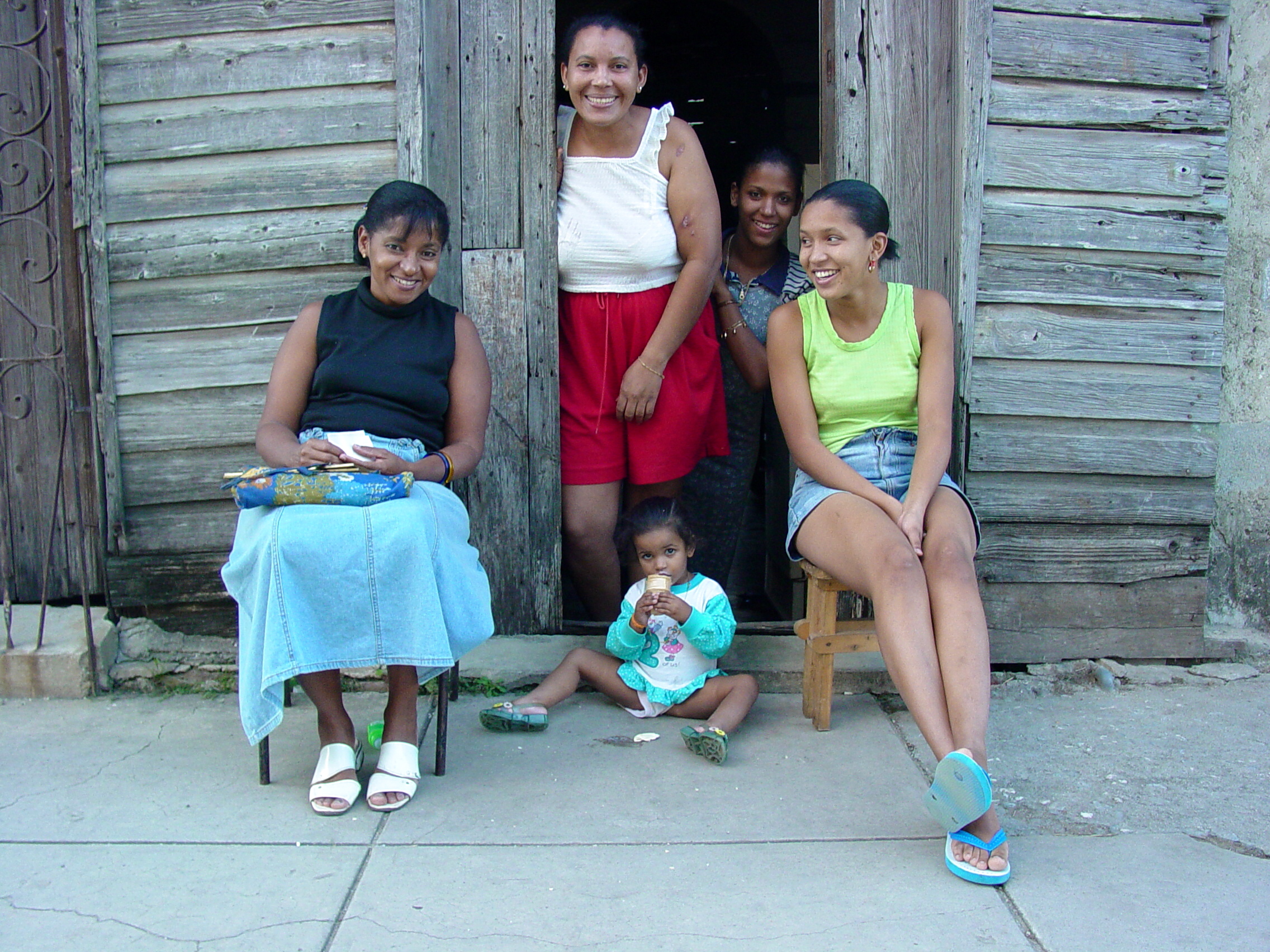
Introduce one person clearly
You are visiting family in Cuba, joining a call or hearing someone introduce a relative. A name alone may be hard to remember; a name with a relationship gives you something to connect it to. Esta es Ana, mi hermana tells your listener both who the person is and how she is related to you.
The people and conversations in this lesson are invented for practice. They do not describe a particular Cuban family. Start with a relationship you actually need: mi madre, mi padre, mi hermana, mi hermano or mi primo. Use your own situation when practising instead of trying to memorise every possible relative at once.
Follow the relationship from both sides
In this example, Ana is Luis’s sister: Ana es la hermana de Luis. Luis is therefore Ana’s brother: Luis es el hermano de Ana. The two sentences describe the same connection from different starting points. Say both aloud and check which name belongs after de.
Now add one person: Marta es la madre de Ana y de Luis. You can describe Marta’s relationship to each of them without adding information about where they live, who raised them or how close they are. A family word establishes one relationship; the rest needs its own explanation.
Keep mi, tu and su with the family word
Compare mi hermana, tu hermana and su hermana. The relative being discussed may be the same person, but the speaker’s point of view changes. If Luis says mi hermana, he means his sister. If you ask Luis ¿Tu hermana se llama Ana?, you refer to Luis’s sister from your own position.
Practise the noun with its possessive: mi primo and mis primos; tu hermana and tus hermanas. Change the ending when the number of relatives changes. For gender, compare mi hermano and mi hermana: the family word changes while mi stays the same. These are general Spanish patterns used in Cuban conversations too.
Replace an unclear su with a name
Suppose someone says Ana está con Marta y su hermana. You may not know whose sister is meant. Instead of guessing, ask ¿La hermana de Ana o la de Marta? A name makes the relationship clearer than repeating su louder. You can also say ¿Te refieres a la hermana de Ana?
The purpose is to identify the person, not interrogate anyone’s family history. Let the speaker give the amount of detail they want. If a relationship or form of address is unfamiliar, ask how the people are connected rather than assuming it means exactly what it would in your own family.
Work through an introduction
Original practice dialogue: —Te presento a Ana, mi hermana. —Mucho gusto, Ana. ¿Y Marta es tu madre? —Sí, es mi madre. —Entonces Luis también es hijo de Marta. —Sí, Luis es mi hermano. After each line, identify who is speaking and whose relationship is being described.
In Ana’s reply, mi madre refers to Ana’s mother. In the visitor’s question, tu madre refers to the mother of the person being addressed. The people have not changed; the viewpoint has. Drawing three names and connecting them with relationship words can make this easier to follow.
Make a correction without losing the introduction
A listener says Entonces Ana es tu prima, but Ana is your sister in this practice scenario. Answer Es mi hermana; mi prima se llama Elena. The first part corrects the mistaken relationship. The second provides a separate person only because it helps explain the confusion. You can stop after the first part if no extra detail is needed.
Now introduce someone on behalf of two siblings: Esta es nuestra madre. With one sister, say nuestra hermana; with one brother, nuestro hermano. The family member being named guides that change. Try the same introduction first as one speaker, then as two: mi madre becomes nuestra madre. Keep the person constant while changing who is speaking.
Once introductions are clear, you may want to ask about food or music. Our gustar lesson shows how to ask what someone likes and follow the reply. That gives the conversation somewhere to go beyond names, while leaving each person free to choose what they want to share.
Move from labels to a real conversation
Prepare a short introduction with two names and one relationship. Then ask a partner to explain the same connection from the other person’s viewpoint. If the answer becomes unclear, replace a possessive with de and the person’s name. Repeat with a different relationship once the first exchange feels manageable.
The home and family vocabulary activity provides another place to practise these words. Heritage learners can also use our guide to learning Cuban Spanish for conversations with family. You do not need an elaborate family tree to begin: one person, one clear relationship and a question you understand are enough for the next exchange.