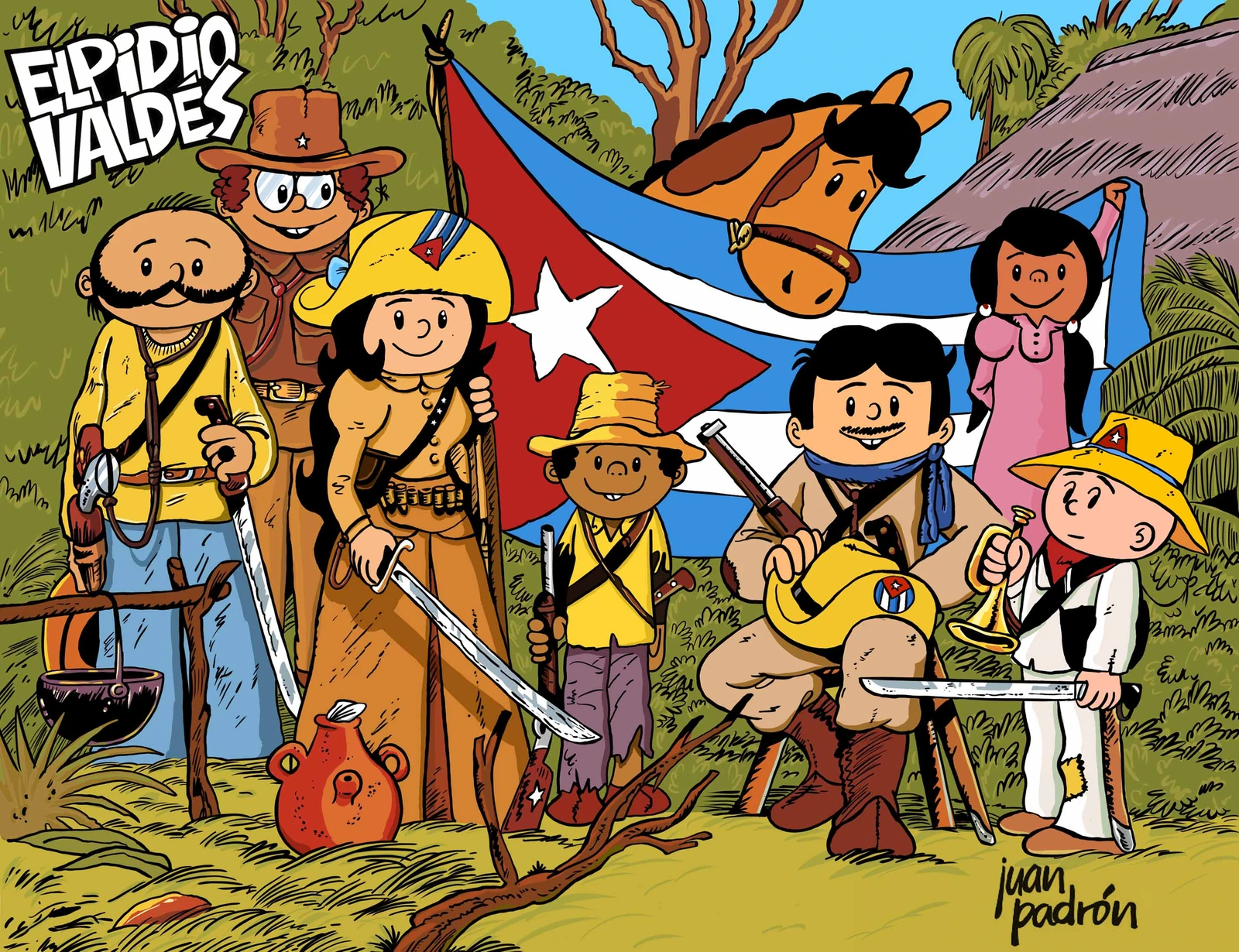
Before Elpidio Valdés became a familiar face of Cuban animation, he appeared in the magazine Pionero in 1970. Juan Padrón brought him into animated shorts in 1974, including Una aventura de Elpidio Valdés and Elpidio Valdés contra el tren militar. His first feature film arrived in 1979.
Elpidio is a colonel in the Ejército Libertador, fighting Spanish colonial rule in the nineteenth century. He commands cavalry, moves through the Cuban countryside and depends on horses, weapons and ammunition. The setting belongs to the independence wars, with a different army and a different conflict from the revolution of 1959.
His horse, Palmiche, is a character in his own right. Padrón's comics include Elpidio trying to train him for war, and another adventure about the animal's sleepwalking. María Silvia is an active fighter too, a captain rather than a heroine left at home waiting to be rescued.
On the other side stands General Resóplez, a pompous Spanish officer. In the comic Elpidio Valdés y la traición de Resóplez, Elpidio releases three prisoners, only to face an ambush. One of the freed Spanish soldiers warns him. Even in this cartoon war, the uniform doesn't explain everything about the person wearing it.
The adventures also borrow real geography. In Elpidio Valdés fuerza la trocha, he crosses the Júcaro–Morón defensive line carrying ammunition to surrounded fighters. A military obstacle becomes a chase, a journey and an animated story. Between Palmiche, María Silvia and Resóplez, Padrón gave that history a whole cast, not just a hero with a large machete.
🎬 More Cuban animation, characters and humour inside Cuban Spanish Academy.