
An opinion that gives the other person something to answer
“La sala me parece pequeña para el ensayo porque somos ocho.” The speaker evaluates the room and supplies a reason: eight people need to rehearse there. Another person can now discuss the space or suggest somewhere else. A bare “No me gusta” leaves much more unexplained.
The scenes and dialogues below are original written practice using general Spanish in Cuban settings. Work on three connected moves: express an opinion, explain the reason and respond to the other person’s view.
Name what you are evaluating
With a singular thing, try “El horario me parece práctico”. With plural things, use “Las sillas me parecen cómodas”. In these sentences, horario and sillas determine parece or parecen. The me tells us whose assessment we are hearing. Keep the object clear before adding a longer explanation.
You can also evaluate a whole idea: “Me parece que el patio tiene más espacio”. Here que introduces the statement being considered. Compare that with “Creo que podemos ensayar allí”. Both introduce an assessment; add a relevant reason with porque.
Add a reason with porque
“Prefiero el patio porque podemos separar más las sillas” connects a choice with its reason. Keep the reason relevant to the discussion. If the question concerns space for a rehearsal, explain the space; a comment about your favourite song would leave the practical question unanswered.
Distinguish the question “¿Por qué prefieres el patio?” from the answer “Porque hay más espacio”. The question uses por qué; the explanatory answer uses porque. Beginning this answer with Porque is normal in that exchange.
Separate an impression from information you still need
“La clase me parece útil porque practicamos las respuestas” explains a personal assessment. “No estoy seguro del horario; prefiero confirmarlo” identifies missing information. Do not turn uncertainty about a timetable into an established fact merely by saying creo que.
For a limited disagreement, say “No lo veo igual” or “A mí me parece más cómodo hacerlo por la mañana”. You need not add an uncertain-sounding introduction to every sentence. Say what you think clearly, and mark uncertainty when it is real.
Reply to a different view without losing your own reason
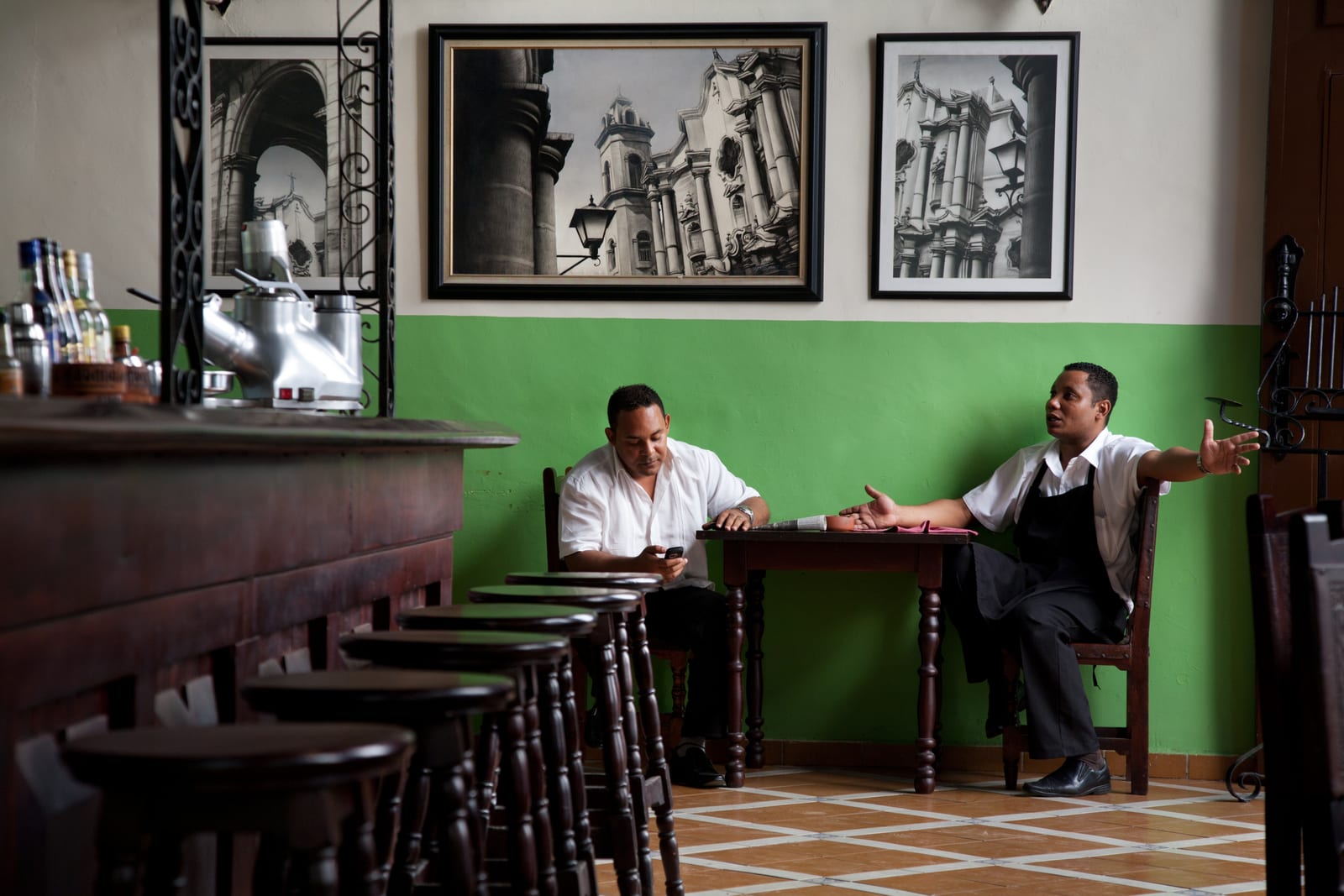
Imagine two friends choosing where to practise after a music lesson in Santiago. One prefers a room; the other suggests a patio. “Entiendo que prefieras la sala. A mí me convence el patio porque hay más espacio” acknowledges the other preference and gives a different criterion.
That acknowledgement does not mean agreement. Continue with “¿Qué te preocupa del patio?” and listen to the answer. Perhaps the concern is noise, not space. A useful reply addresses that concern rather than repeating the same opinion more loudly.
Ask about a criterion, not just a verdict
“¿Qué te parece este plan?” invites an assessment. “¿Te parece práctico para quienes vienen desde lejos?” narrows it to a particular need. In an imagined family visit in Camagüey, that second question gives everyone a clearer problem to discuss than simply calling the plan good or bad.
Taste and practical evaluation can overlap, but they are different tasks. “Me gusta esta música” expresses liking. “Este volumen me parece demasiado alto para conversar” evaluates the sound level against a purpose. The guide to gustar develops the first construction; here the next step is explaining a criterion.
Follow one exchange through a change of plan
Original practice dialogue: “¿Qué te parece ensayar aquí?” — “La sala me parece pequeña porque somos ocho”. — “Entiendo. El patio tiene más espacio, pero allí se oye la calle”. — “Es verdad. Podemos probar con menos sillas y decidir después”. The speakers compare two constraints instead of treating disagreement as the end of the conversation.
Now change the situation: only three people will rehearse. Reconsider the first reason rather than keeping it mechanically. A possible reply is “Con tres personas, la sala me parece suficiente”. Your language should follow the actual reason you are giving.
Practise the reason and the response
Write three short replies. 1. Give one reason for practising in the morning. 2. Ask why someone prefers the room. 3. Disagree about a proposed place while acknowledging its advantage. These are open exercises: a sensible alternative can work if the Spanish and the situation fit.
Possible answers: 1. “Prefiero practicar por la mañana porque después trabajo”. 2. “¿Por qué prefieres la sala?” 3. “Entiendo que esté más cerca, pero el otro lugar me parece más tranquilo para hablar”. Check that each explanation answers the actual question. Then take both parts of a dialogue and practise changing the reason.