
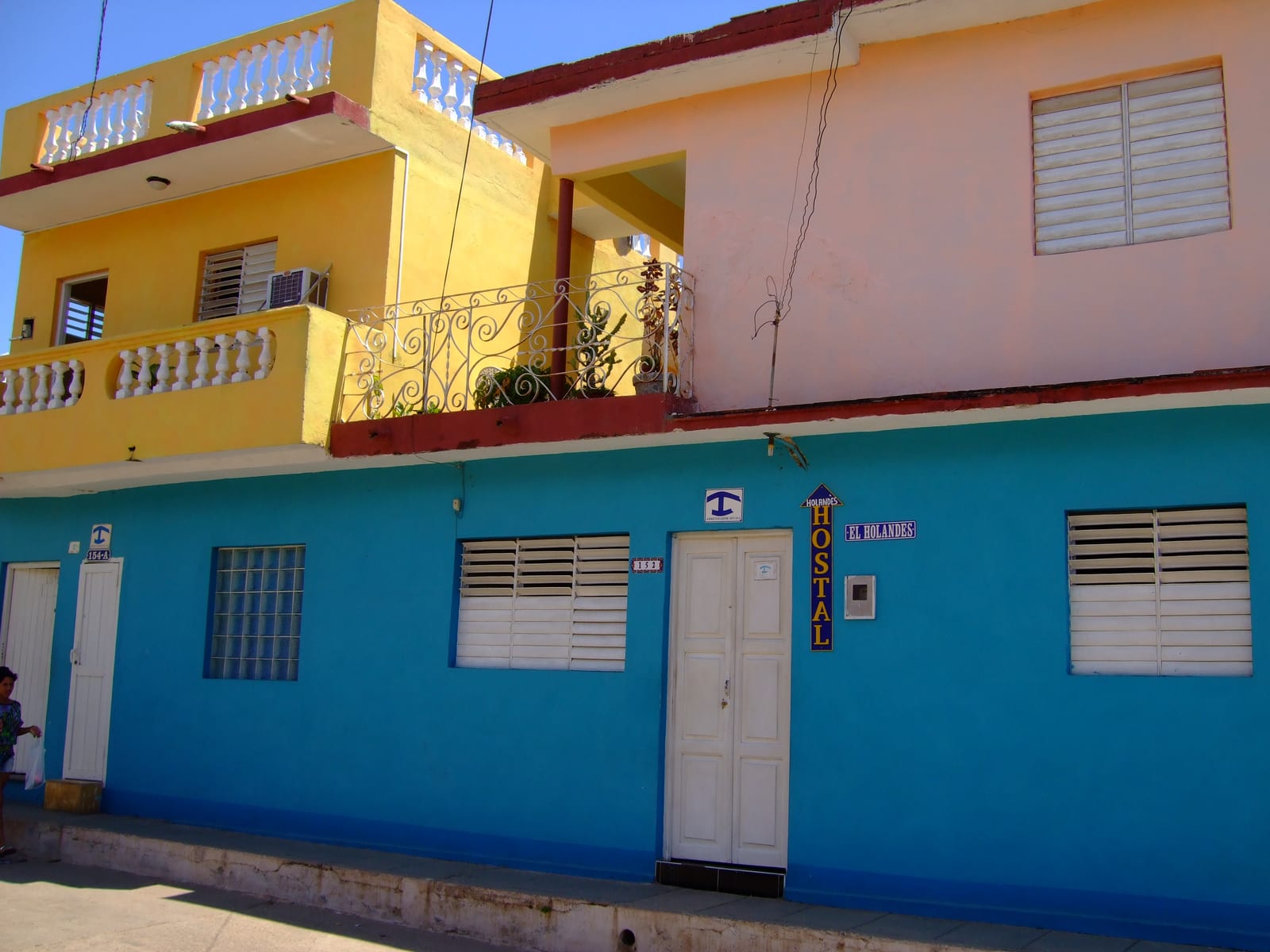
Start with what you have booked
When speaking to a casa particular host in Cuba, separate a reservation you already have from a request for a room. “Tengo una reserva a nombre de Elena Ruiz” identifies an existing booking. “Quisiera saber si tienen una habitación disponible” asks about availability. The names and conversations in this lesson are original teaching examples, not real bookings or promises about any property.
Add the number of guests and the dates before moving to details: “Somos dos personas. Llegamos el día doce y salimos el quince.” Say the month as well if it is not already clear. Then ask “¿Puede confirmar las fechas?” Repeating the arrival and departure dates is more precise than relying only on a number of nights.
Describe the beds you actually need
A room label does not tell you everything about its beds. Instead of stopping at “una habitación doble”, specify “una habitación con dos camas” or “una habitación con una cama grande”. Ask “¿La habitación tiene una cama o dos?” when the description leaves this unresolved. These questions concern the particular room being offered, not all the rooms in the house.
Original example: “Viajamos dos personas y necesitamos camas separadas. ¿La habitación que reservamos tiene dos camas?” If the reply is “Tiene una cama grande”, you have a concrete difference to discuss. Follow with “¿Hay otra habitación con dos camas?” rather than assuming that a change is available or included.
Ask who uses the bathroom and where it is
“¿El baño es privado o compartido?” asks whether other guests use it. “¿El baño está dentro de la habitación?” asks a different question: its location. A description that says “privado” does not itself answer the second question. Use both if a bathroom inside the room is important to you.
You can confirm without repeating the whole conversation: “Entonces, el baño es solo para nosotros, pero está fuera de la habitación. ¿Es así?” Here “entonces” introduces your understanding of the answer. If a detail is still unclear, ask about that detail alone; a longer sentence with several questions makes it harder to identify what was answered.
Agree on arrival and departure times
“Llegamos a las cuatro de la tarde” states your expected arrival. It does not confirm that you can enter the room then. Ask “¿A qué hora podemos entrar en la habitación?” and, separately, “¿A qué hora tenemos que dejar la habitación el día de salida?” The answers depend on the arrangement; this lesson gives no standard check-in or check-out time.
Distinguish a room request from a luggage request: “Si llegamos antes, ¿podemos dejar las maletas?” The answer may be different from the answer about entering the room. When you hear a time, repeat it with “de la mañana”, “de la tarde” or “de la noche” when needed: “¿A las once de la mañana, entonces?”
Separate breakfast availability from its price
“¿Ofrecen desayuno?” asks whether breakfast is offered. “¿El desayuno está incluido?” asks whether it is part of the agreed price. If it is extra, ask “¿Cuánto cuesta por persona y por día?” and confirm the currency. Do not turn a breakfast photo, a room price or another traveller’s experience into an assumption about your booking.
Ask about time and contents separately: “¿A qué hora sirven el desayuno?” and “¿Qué incluye?” Original example: “Salimos temprano mañana. ¿Sería posible desayunar antes?” This is a request, not a claim that an earlier service exists. If it cannot be arranged, you can simply reply “Entendido, mañana no tomaremos desayuno aquí”.
Make one practical request at a time
Choose questions that affect your stay. “¿Hay escaleras para llegar a la habitación?” is more specific than asking whether access is easy. “¿Cómo abrimos la puerta si volvemos tarde?” asks about entering the house. If you need a particular feature, name it and ask about the room you will use; do not infer it from a general description of the property.
For a language difficulty, “No entendí la última parte. ¿Puede repetirla más despacio?” identifies exactly what you missed. For a date or time, “¿Puede escribirlo, por favor?” gives you something to check. These are ordinary Spanish questions useful in Cuba; you do not need to add slang or imitate an accent to make them work.
Finish by repeating the agreement
Original practice exchange: Guest: “Quiero confirmar: llegamos el doce por la tarde y salimos el quince. Somos dos personas y la habitación tiene dos camas. ¿Correcto?” Host: “Sí. El baño es privado y está dentro.” Guest: “Gracias. ¿El desayuno está incluido?” Host: “No, se paga aparte.” Guest: “Entonces, por ahora confirmamos solo la habitación.” The invented reply illustrates a distinction; it describes no real accommodation.
Practise the same exchange again, changing one detail: one bed instead of two, a later arrival, or breakfast on one morning only. Your final summary should match the new answers. Keep the confirmed dates and conditions together so that a later question refers to the same stay. If you leave an object behind, the separate lost-object lesson helps you describe it precisely.